
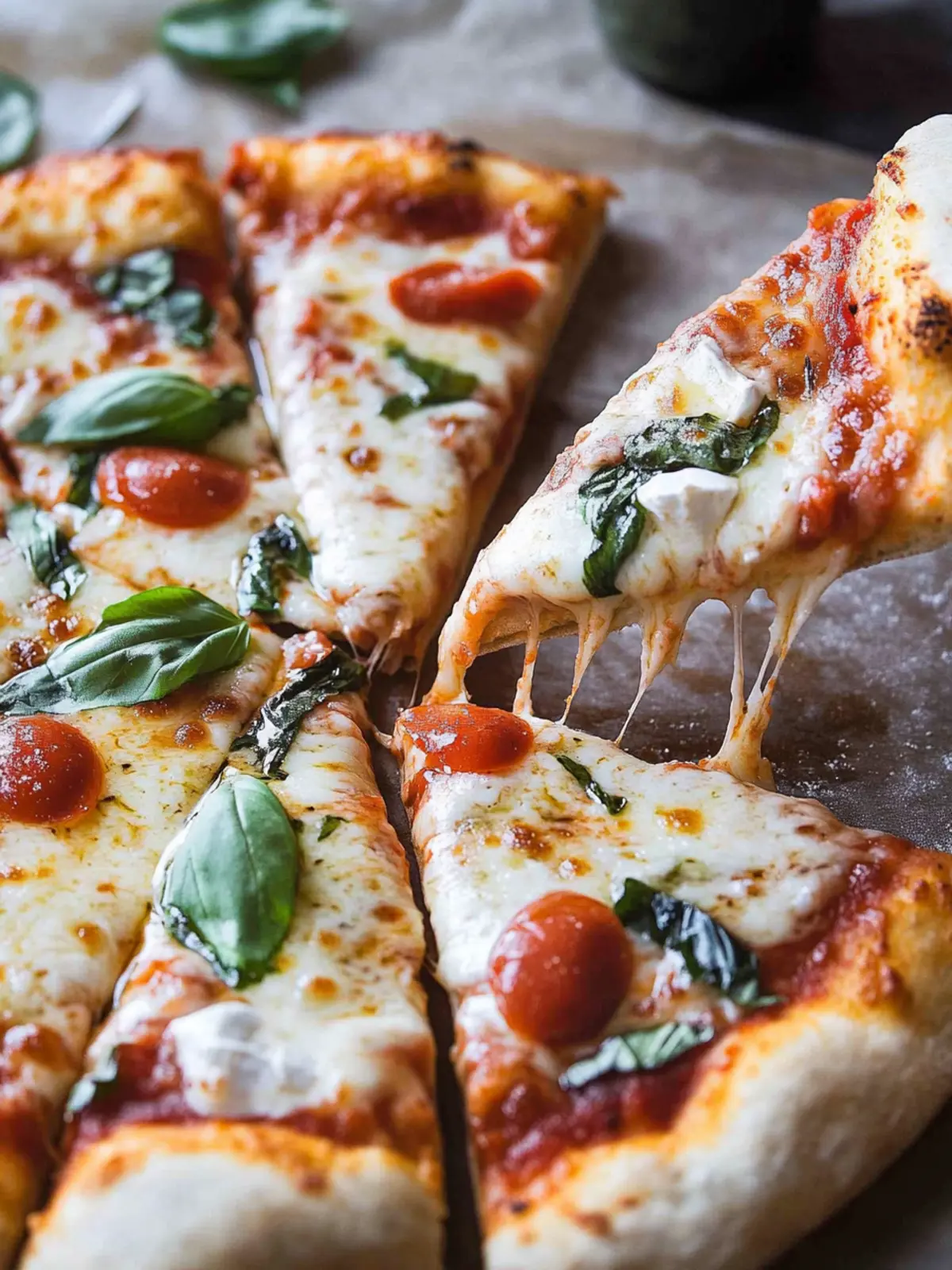
There’s something truly satisfying about gathering with friends and family over a warm, homemade pizza. The whole experience—from mixing the dough to the tantalizing aroma wafting through the kitchen—creates a sense of togetherness that’s hard to beat. I discovered the joy of crafting my own pizza crust while exploring ways to break free from the monotony of takeout. This adaptable recipe not only delivers a crust that’s perfectly crisp on the outside and tender on the inside but also invites creativity with endless topping possibilities.
Whether you’re craving a thin and crispy base for a classic Margherita or a thick Sicilian-style crust loaded with hearty ingredients, this pizza dough recipe is your blank canvas. No matter your schedule, you’ll find it easy to whip up a batch, making it ideal for everything from weeknight dinners to weekend gatherings. Come join me as we unleash our inner pizzaiolo and create something wonderfully delicious right in our own kitchens!

Why is this pizza crust a game changer?
Endless possibilities: This easy homemade recipe allows for countless variations, tailoring your pizza to your unique preferences.
Quick prep: With simple ingredients and straightforward steps, making your own pizza crust has never been easier—perfect for busy days!
Flexible textures: Choose between a crispy thin crust or a hearty Sicilian-style base to match any topping you desire.
Mess-free dining: Nothing beats a homemade pizza night with family or friends, bringing everyone together in a fun and interactive way.
Satisfying aroma: Enjoy the irresistible smell of freshly baked pizza filling your kitchen—it’s the ultimate comfort food experience!
Check out other easy pizza recipes to get inspired for your next pizza night!
Pizza Crust Ingredients
• This section covers everything you’ll need for your homemade pizza crust.
For the Dough
- Active Dry Yeast or Instant Yeast – Essential for rising; activate in warm water if using active dry yeast, while instant yeast can be added directly.
- Lukewarm Water – Vital for hydration; adjust depending on humidity levels—opt for less in humid months and more in dry winters.
- Olive Oil – Adds rich flavor and moisture; substitute with vegetable oil for a lighter taste if desired.
- King Arthur Unbleached All-Purpose Flour – The building block of your crust; opt for bread flour for chewiness, or try a gluten-free flour mix to fit dietary needs.
- Table Salt – Enhances the overall flavor, creating a balanced dough that speaks to your taste buds.
Optional Add-ins
- Herbs (like oregano or basil) – Infuse your dough with aromatic flavors for an extra burst of taste.
- Garlic Powder – A great addition for a subtle kick that elevates the flavor profile of your pizza crust.
Feel free to explore different textures or combinations to make this pizza crust your very own masterpiece!
How to Make Pizza Crust
-
Activate Yeast: In a small bowl, combine active dry yeast with lukewarm water and let it sit for about 15 minutes, or until it becomes bubbly. If you’re using instant yeast, you can skip this step!
-
Mix Dough: In a large mixing bowl, combine the yeast mixture (or instant yeast directly) with flour, olive oil, and salt. Stir until a soft dough forms, then knead for 4-5 minutes, until smooth and elastic.
-
Rising Dough: Place the kneaded dough in a greased bowl, cover it with a cloth, and let it rise in a warm place until puffy—approximately 1 hour if using instant yeast and up to 90 minutes for active dry.
-
Shape Dough: Once the dough has risen, punch it down and shape it into your desired pizza form. If you’re planning to use it later, refrigerate the dough after a 45-minute rise for 4-24 hours.
-
Prepare Pan: Grease your pizza pan(s) with a drizzle of olive oil, ensuring the surface is well-coated to prevent sticking.
-
Final Proof: After shaping, place the dough in the pan and cover it lightly. Allow it to rest and rise again until noticeably puffy, about 90 minutes.
-
Preheat Oven: Set your oven to 450°F (230°C) to prepare for baking the crust.
-
Pre-Bake Crust: Place the crust in the preheated oven and bake until it’s set but has a pale color—this typically takes about 8-14 minutes depending on the thickness.
-
Add Toppings and Bake: Once pre-baked, remove the crust, add your favorite toppings, and return it to the oven. Bake again until everything is browned and delicious.
Optional: Add some fresh herbs on top before serving for an aromatic finish!
Exact quantities are listed in the recipe card below.

Make Ahead Options
These pizza crusts are perfect for meal prep enthusiasts looking to save time! You can prepare the dough up to 24 hours in advance. Simply knead the dough as per the recipe, then refrigerate it after the first rise. To maintain quality, wrap the dough tightly in plastic wrap to prevent it from drying out. When you’re ready to bake, take it out and let it rest at room temperature for about 30 minutes before shaping and proofing it again in the pan. This way, you’ll enjoy that homemade pizza crust that’s just as delicious, ready for your favorite toppings on busy weeknights!
How to Store and Freeze Pizza Crust
Room Temperature: Keep unbaked pizza crust wrapped in plastic wrap at room temperature for up to 2 days. This way, you can easily grab it for a quick homemade meal.
Fridge: Refrigerate leftover baked pizza for 3-4 days in an airtight container. Reheat in the oven for a crispy finish that brings back the delightful texture of your pizza crust.
Freezer: For longer storage, freeze unbaked pizza crust wrapped tightly in plastic wrap and aluminum foil for up to 3 months. Thaw in the fridge overnight before use.
Reheating: If baked and frozen, reheat your pizza in a 375°F (190°C) oven for about 10 minutes. This restores the crust’s freshness and crispy edges beautifully.
Pizza Crust Variations
Get ready to make this pizza crust your own with exciting twists that tantalize the taste buds!
-
Thin Crust: Roll the dough out to a quarter-inch thickness for a delightfully crispy base that holds your toppings with ease. Perfect for those who love that classic pizzeria crunch!
-
Sicilian Style: For a thicker, hearty crust, use double the dough amount and allow it to rise in a deep pan. This style cradles generous toppings beautifully, offering a satisfying bite.
-
Herbed Dough: Mix in dried herbs like oregano and basil directly into the dough for an aromatic layer of flavor. Your kitchen will smell heavenly as it bakes, making every slice feel special!
-
Cauliflower Crust: Swap traditional flour with finely riced cauliflower for a gluten-free and veggie-packed version. Just squeeze out excess moisture for a pristine crust that’s both crispy and nutritious.
-
Garlic Infusion: For a burst of savory flavor, knead minced garlic or garlic powder into your dough. This will elevate your crust, making it aromatic and delicious for any topping you choose.
-
Cheesy Touch: Fold shredded cheese—like mozzarella or parmesan—into the dough before shaping it. This creates a gooey surprise in each bite, adding richness that’s simply irresistible.
-
Spicy Kick: Spice things up by adding crushed red pepper flakes or a dash of cayenne pepper to your dough for an unexpected kick. It’s a slight change that transforms the entire experience!
-
Sweet Twist: For a unique dessert pizza, incorporate a little sugar and cinnamon into your dough, then top with fruit and cream cheese frosting post-bake. It’s a delightful way to end your pizza night on a sweet note!
What to Serve with Pizza Crust?
Nothing brings people together quite like a homemade pizza night, with delightful aromas and vibrant flavors captivating your senses.
-
Fresh Tomato Salad: Bright, juicy tomatoes drizzled with olive oil and balsamic vinegar create a refreshing contrast to the warm, cheesy pizza.
-
Garlic Breadsticks: Soft, buttery breadsticks with a hint of garlic are the perfect accompaniment, inviting you to savor every bite alongside your pizza.
-
Mixed Green Salad: A crisp salad with crunchy greens and a zesty vinaigrette balances out the richness of the pizza, making for a well-rounded meal.
-
Antipasto Platter: A colorful spread of cured meats, cheeses, olives, and roasted peppers offers a Mediterranean flair, sparking a burst of flavor before the main course.
-
Homemade Pesto Dipping Sauce: Whip up a vibrant pesto for dipping your crusts into; the fragrant basil and garlic elevate the pizza experience to new heights.
-
Wine Pairing: A light red wine, such as Chianti, complements the savory flavors of pizza beautifully, enhancing the dining experience with every sip.
-
Chocolate Chip Cookies: For dessert, soft and chewy chocolate chip cookies add a sweet finish, leaving everyone with a satisfying and nostalgic taste.
Think of these pairings as delightful companions that will enhance your pizza crust experience, making your meal unforgettable!
Expert Tips for Perfect Pizza Crust
• Knead Just Right: Avoid over-kneading—stop once the dough is smooth and elastic to ensure a tender pizza crust.
• Rising Time: Be patient with rising times; dough should double in size, which indicates it’s ready for baking and will have the best texture.
• Flour Matters: Experiment with different flours for varied flavors and textures; bread flour adds chewiness, while gluten-free mixes accommodate dietary needs.
• Baking Surface: For a crisper bottom, preheat a pizza stone! It creates a lovely texture that rivals your favorite pizzeria.
• Storage Savvy: If making ahead, store unbaked dough in plastic wrap at room temperature for up to 2 days, keeping it fresh for later use.

Pizza Crust Recipe FAQs
How do I know if my yeast is active?
To check if your active dry yeast is alive, dissolve it in warm water (about 110°F) along with a bit of sugar and let it sit for about 15 minutes. If it bubbles and expands, your yeast is active and ready to go! If there’s no activity, it might be dead, so you’ll want to start over with fresh yeast.
How long can I store unbaked pizza crust?
You can store unbaked pizza crust by wrapping it tightly in plastic wrap and keeping it at room temperature for up to 2 days. Just make sure to keep it away from drafts and direct sunlight to maintain its freshness.
Can I freeze the pizza crust, and if so, how?
Absolutely! To freeze the unbaked pizza crust, wrap it tightly in plastic wrap followed by aluminum foil. This will keep it fresh for up to 3 months. When you’re ready to use it, simply thaw it in the fridge overnight before shaping and baking.
What if my pizza crust turns out tough?
If your pizza crust ends up tough, it may be due to over-kneading. Make sure to knead just until the dough is smooth and elastic, which typically takes 4-5 minutes. Additionally, ensure you’re using the correct flour type—using bread flour can give a chewier texture, while all-purpose flour yields a softer crust.
Are there any dietary considerations when making this pizza crust?
Yes, if you have dietary restrictions, you can experiment with gluten-free flour blends to accommodate gluten-free needs. For a vegan option, substitute olive oil with vegetable oil and ensure your chosen toppings are free from animal products. Always check labels for potential allergens if preparing for someone with allergies.
How can I tell when my pizza crust is fully baked?
You’ll know your pizza crust is ready when it has a slightly golden color and feels firm to the touch. For a perfect finish, bake it based on its thickness—thin crusts usually take around 8-10 minutes, while thicker ones can take up to 14 minutes. Also, trust your nose! The aroma of freshly baked dough is hard to miss.

Perfect Your Pizza Crust: Easy Homemade Recipe & Variations
Equipment
- Mixing bowl
- pizza pan
- Oven
Ingredients
For the Dough
- 1 packet Active Dry Yeast or Instant Yeast Activate in warm water for active dry yeast
- 1 cup Lukewarm Water Adjust based on humidity levels
- 2 tablespoons Olive Oil Use vegetable oil for lighter taste
- 3 cups King Arthur Unbleached All-Purpose Flour Substitute with bread flour for chewiness
- 1 teaspoon Table Salt Enhances flavor
Optional Add-ins
- 1 teaspoon Herbs (like oregano or basil) For aromatic flavors
- 1 teaspoon Garlic Powder For a subtle kick
Instructions
Making Pizza Crust
- Activate Yeast: In a small bowl, combine active dry yeast with lukewarm water and let it sit for about 15 minutes, or until it becomes bubbly.
- Mix Dough: In a large mixing bowl, combine the yeast mixture (or instant yeast directly) with flour, olive oil, and salt. Stir until a soft dough forms, then knead for 4-5 minutes, until smooth and elastic.
- Rising Dough: Place the kneaded dough in a greased bowl, cover it with a cloth, and let it rise in a warm place until puffy—approximately 1 hour if using instant yeast and up to 90 minutes for active dry.
- Shape Dough: Once the dough has risen, punch it down and shape it into your desired pizza form. If you're planning to use it later, refrigerate the dough after a 45-minute rise for 4-24 hours.
- Prepare Pan: Grease your pizza pan(s) with a drizzle of olive oil, ensuring the surface is well-coated to prevent sticking.
- Final Proof: After shaping, place the dough in the pan and cover it lightly. Allow it to rest and rise again until noticeably puffy, about 90 minutes.
- Preheat Oven: Set your oven to 450°F (230°C) to prepare for baking the crust.
- Pre-Bake Crust: Place the crust in the preheated oven and bake until it’s set but has a pale color—this typically takes about 8-14 minutes depending on the thickness.
- Add Toppings and Bake: Once pre-baked, remove the crust, add your favorite toppings, and return it to the oven. Bake again until everything is browned and delicious.